

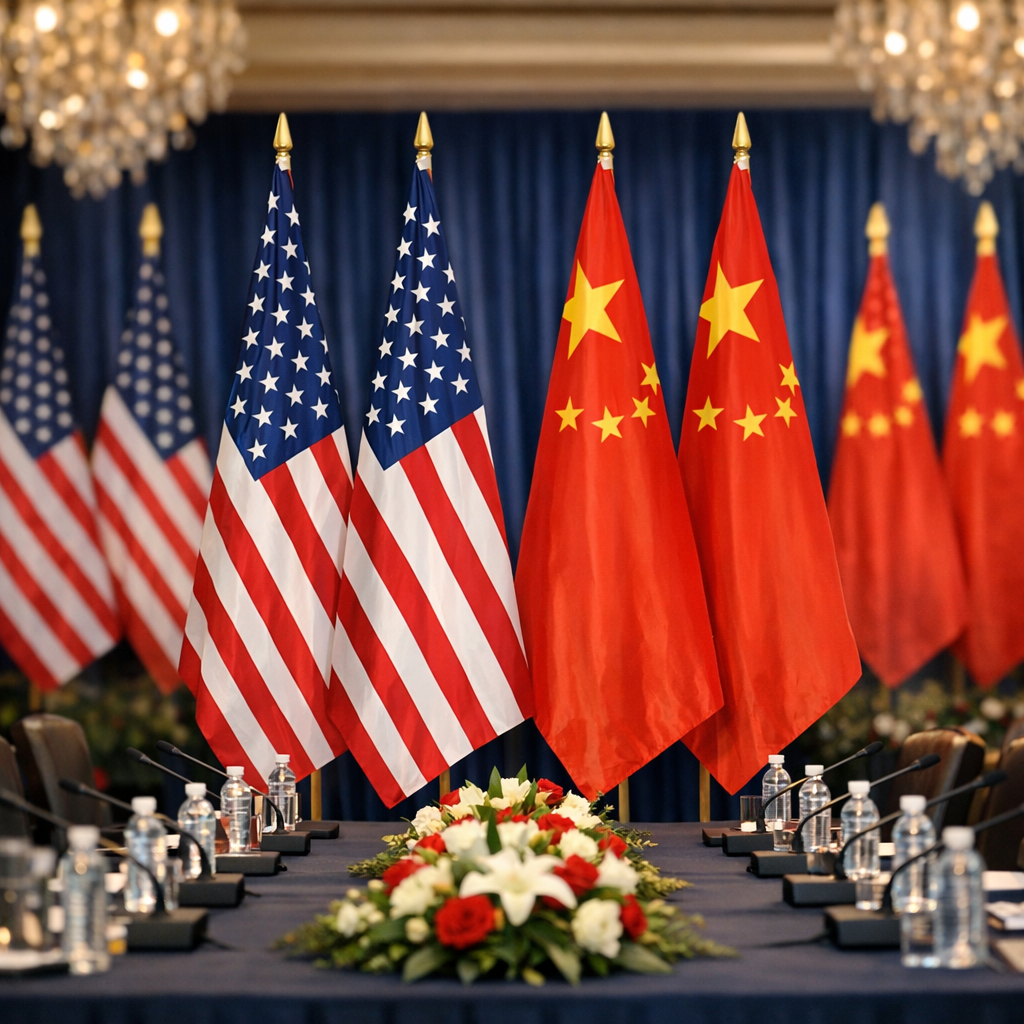
The relationship between the United States and China stands as one of the most pivotal in global affairs, influencing economic trends, political strategies, and international stability. As of mid-2026, this bilateral relationship is characterized by a complex interplay of cooperation, competition, and cautious diplomacy.
Economic Interdependence Amidst Trade Tensions
Economically, the U.S. and China remain deeply intertwined. China has solidified its position as the world’s largest exporter, with goods exports reaching $3.59 trillion in 2024, surpassing the U.S. figure of $1.9 trillion. This economic interdependence underscores the significance of maintaining stable trade relations.
However, trade tensions persist. In June 2026, the U.S. Trade Representative proposed a 12.5% tariff on goods from China and Hong Kong, citing concerns over forced labor practices. Such measures have the potential to escalate trade disputes, affecting global supply chains and economic growth.
Political Dynamics and Diplomatic Engagements
Politically, both nations have engaged in high-level dialogues to manage their differences. A notable summit in May 2026 between President Donald Trump and President Xi Jinping aimed to foster a “constructive and stable strategic relationship.” Despite these efforts, underlying tensions remain, particularly concerning issues like Taiwan and technological competition.
Public perception in the U.S. has shown a slight shift. A Pew Research Center survey from April 2026 indicated that favorable views of China among Americans have nearly doubled since 2023, though a majority still view China as a competitor rather than a partner.
Global Implications and Future Outlook
The trajectory of U.S.-China relations holds significant implications for global stability. Both nations are key players in addressing international challenges such as climate change, cybersecurity, and public health. Their ability to collaborate or confront each other will shape global policies and economic trends.
For Hong Kong, situated at the crossroads of East and West, the evolving dynamics between the U.S. and China are particularly consequential. The city’s role as a global financial hub and its unique political status necessitate a keen understanding of these developments.
In conclusion, while efforts are being made to stabilize U.S.-China relations, the path forward is fraught with challenges. Continuous dialogue, mutual respect, and a commitment to addressing contentious issues are essential for fostering a more cooperative and less adversarial relationship.