

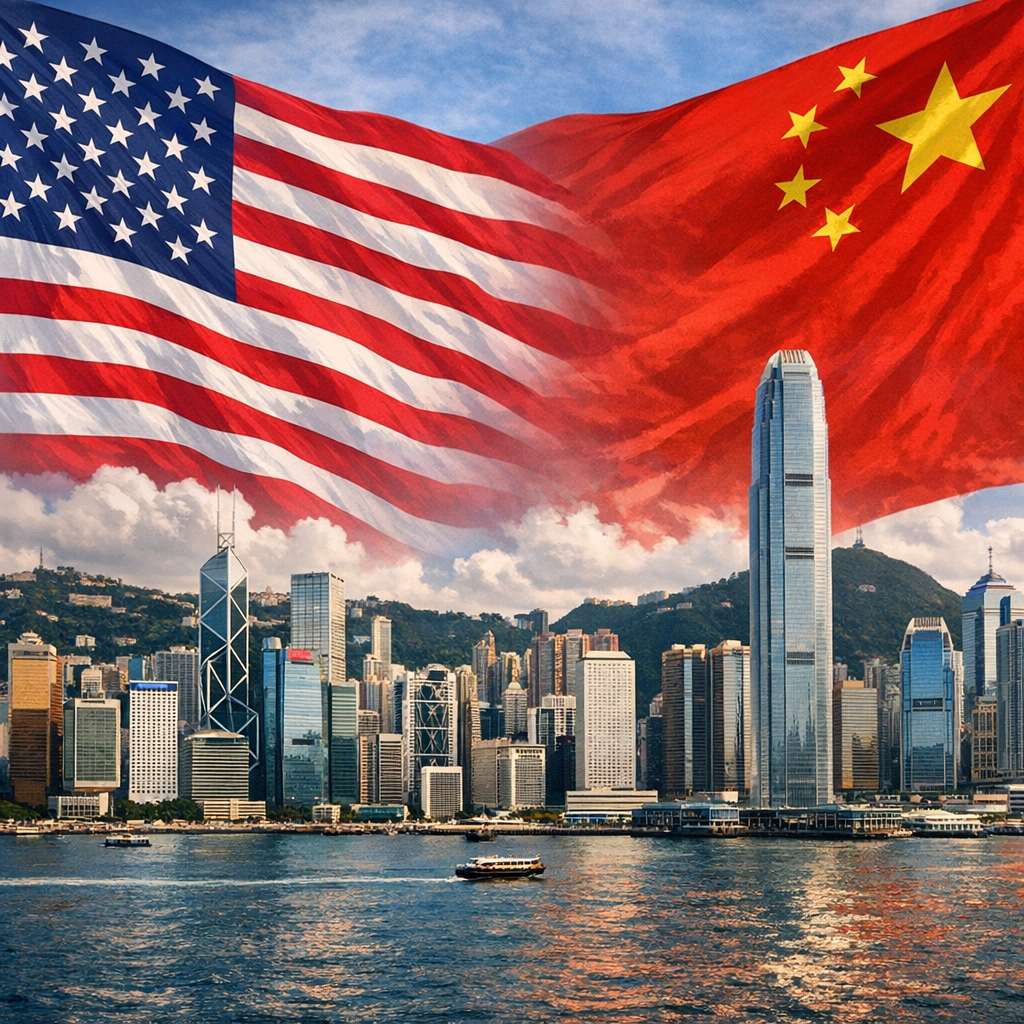
Hong Kong has long stood as a unique bridge between East and West, embodying a blend of Eastern traditions and Western economic practices. However, the evolving dynamics between the United States and China have cast a shadow over this delicate balance, prompting concerns about the city’s future autonomy and economic stability.
Historical Context
Under the ‘one country, two systems’ framework established during the 1997 handover, Hong Kong was promised a high degree of autonomy until 2047. This arrangement allowed the city to maintain its own legal and economic systems, distinguishing it from mainland China. However, recent developments have raised questions about the durability of this autonomy.
Recent Developments
In recent years, Beijing has implemented measures that appear to tighten its grip on Hong Kong. Notably, the enactment of the National Security Law in 2020 granted the central government broad powers to suppress dissent and curtail freedoms within the city. This move has been perceived by many as a significant erosion of the promised autonomy.
In response, the United States has taken steps to reassess its relationship with Hong Kong. The Hong Kong Autonomy Act, signed into law in July 2020, imposed sanctions on officials and entities deemed responsible for undermining the city’s autonomy. Additionally, the U.S. revoked Hong Kong’s special trading status, aligning its treatment more closely with that of mainland China.
Economic Implications
The revocation of Hong Kong’s special status has introduced new challenges for the city’s economy. Previously, Hong Kong enjoyed preferential trade terms with the U.S., exempting it from tariffs imposed on mainland China. The loss of this status means that Hong Kong is now subject to the same tariffs and trade restrictions as the rest of China, potentially affecting its attractiveness as an international business hub.
Furthermore, the U.S. has tightened export controls, restricting the sale of sensitive technologies to Hong Kong. This move could impact sectors such as finance and technology, which have been pillars of the city’s economy.
Looking Ahead
As the geopolitical landscape continues to evolve, Hong Kong finds itself at a crossroads. The city’s ability to navigate these challenges will depend on various factors, including the policies of the central government, the responses of international partners, and the resilience of its own institutions.
For residents and businesses in Hong Kong, staying informed and adaptable is crucial. Engaging in open dialogue, fostering international partnerships, and upholding the city’s core values will be essential in preserving Hong Kong’s unique position on the global stage.