

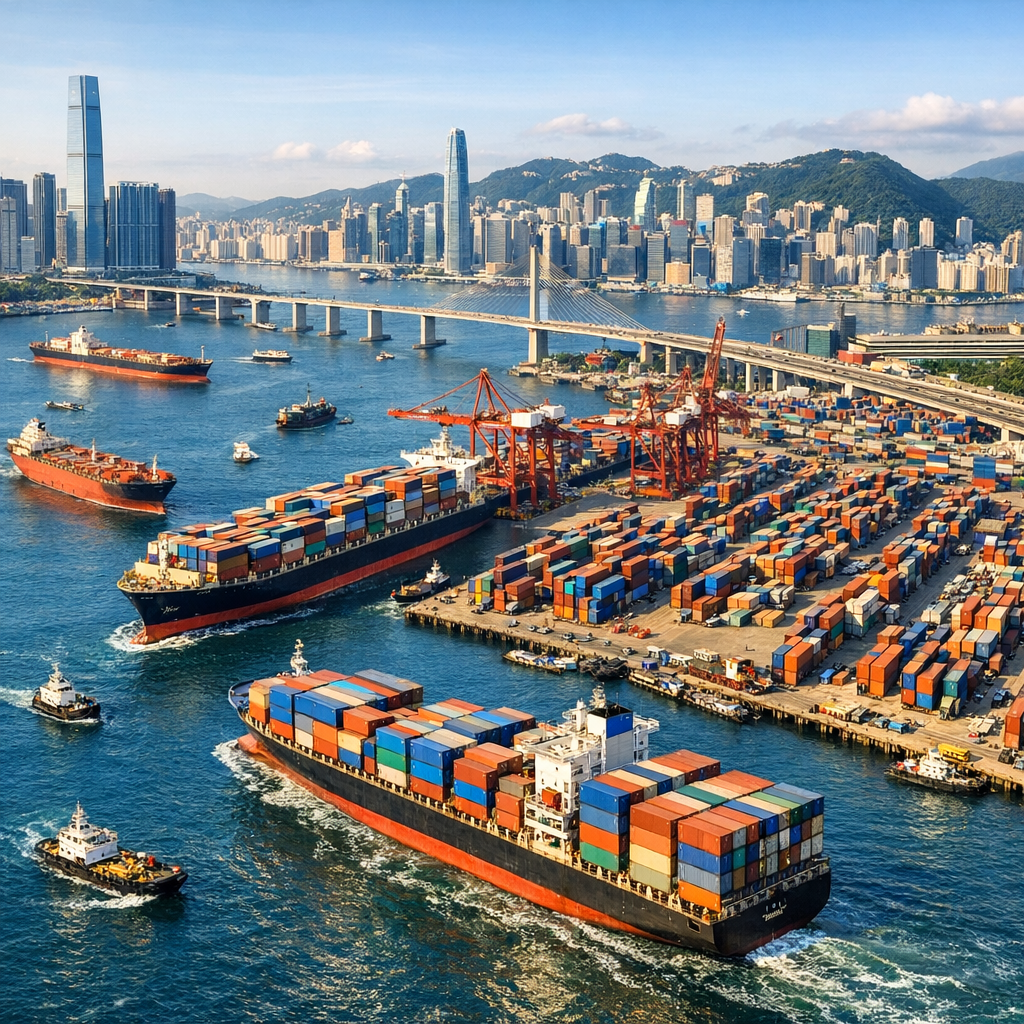
As trade tensions between the United States and China continue to escalate, Hong Kong finds itself in a precarious position, given its unique status as a global trade hub and its close economic ties with both nations.
Hong Kong’s Trade Relations with the US and China
In 2024, Hong Kong’s bilateral merchandise trade with the United States amounted to US$64.3 billion, marking a 6.2% increase from the previous year. The US was Hong Kong’s second-largest export market, accounting for 6.5% of total exports. Major exports included telecommunications equipment, electrical machinery, and office machines. Imports from the US constituted about 4.2% of Hong Kong’s total imports, featuring products like beef, wine, and agricultural goods.
Simultaneously, Hong Kong’s trade with Mainland China has been substantial. In 2025, trade between Hong Kong and the Mainland reached HK$5,620.3 billion (US$720.7 billion), representing 51.4% of Hong Kong’s total merchandise trade. This underscores the city’s pivotal role as an intermediary in Sino-US trade.
Impact of US-China Trade Tensions on Hong Kong
The ongoing trade disputes have introduced several challenges for Hong Kong:
- Re-export Dynamics: As a major re-export hub, Hong Kong facilitates significant trade between China and the US. Tariffs imposed by both nations have disrupted these flows, leading to decreased re-export volumes and affecting logistics and related sectors.
- Economic Uncertainty: The trade tensions have created an environment of uncertainty, impacting business confidence and investment decisions. Sectors such as banking, finance, and professional services, which are integral to Hong Kong’s economy, have felt the repercussions.
- Policy Adjustments: In response to the escalating trade war, the US has imposed tariffs on Hong Kong goods and revoked certain customs exemptions. These measures have prompted Hong Kong to seek redress through the World Trade Organization, highlighting the complexities of its position in the global trade landscape.
Strategies for Mitigation
To navigate these challenges, Hong Kong has been exploring several strategies:
- Diversifying Trade Partnerships: By strengthening trade relations with other regions, such as ASEAN countries and the Middle East, Hong Kong aims to reduce its reliance on US and Mainland China trade.
- Enhancing Competitiveness: Investing in technology and innovation can bolster Hong Kong’s position as a leading financial and logistics hub, making it more resilient to external shocks.
- Policy Advocacy: Engaging in diplomatic dialogues and leveraging international platforms to advocate for free trade principles can help mitigate adverse impacts from protectionist measures.
In conclusion, while the US-China trade tensions pose significant challenges, Hong Kong’s strategic initiatives and adaptive measures can help maintain its status as a vital player in global trade.