

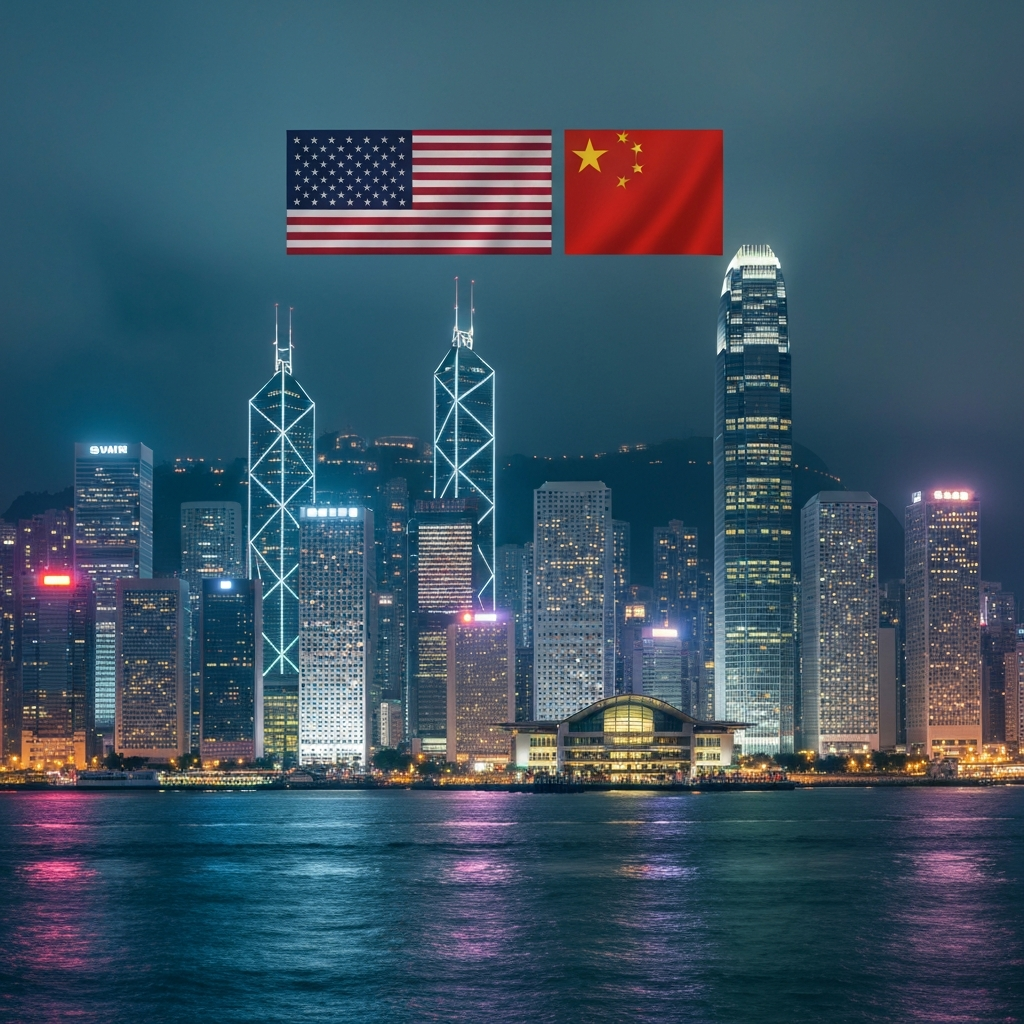
Hong Kong has long served as a pivotal bridge between the United States and China, facilitating economic exchanges and cultural interactions. However, recent developments have prompted a reevaluation of this role.
Historical Context
Since its return to Chinese sovereignty in 1997, Hong Kong has operated under the “One Country, Two Systems” framework, granting it a high degree of autonomy. This unique status enabled the city to act as a neutral ground for U.S.-China engagements, particularly in trade and finance.
Recent Developments
In recent years, escalating tensions between the U.S. and China have placed Hong Kong in a challenging position. The imposition of the Hong Kong Autonomy Act by the U.S. in 2020, which led to sanctions on officials and entities undermining Hong Kong’s autonomy, marked a significant shift. This move effectively ended the city’s preferential treatment under U.S. law, aligning it more closely with mainland China in the eyes of American policymakers. [Source: Hong Kong–United States relations]
Economic Implications
The trade conflict between China and the U.S. has had tangible effects on Hong Kong’s economy. As a major trading hub, the city has felt the impact of tariffs and trade restrictions. For instance, sectors such as telecommunications equipment and electronics, which constitute significant portions of Hong Kong’s exports to the U.S., have been adversely affected. [Source: Explainer | How is Hong Kong tackling the impact of the US-China trade war?]
Looking Ahead
Despite these challenges, Hong Kong continues to possess attributes that could enable it to mediate between the U.S. and China. Its established legal system, financial infrastructure, and international connectivity remain valuable assets. However, the city’s ability to maintain this intermediary role will depend on the evolving geopolitical landscape and the policies adopted by both superpowers.
In conclusion, Hong Kong’s position amidst U.S.-China relations is undergoing significant transformation. While its traditional role as a neutral facilitator is being tested, the city’s future will be shaped by how it navigates these complex international dynamics.